Thursday, May 4, 2017

Podcasts on web radio show "Please Leave A Message"


Thumb 1490997326 artwork
I recently collaborated with an old acquaintance, Richard McLean, on his podcast, "Please Leave A Message." He was looking for help on an episode when his planned guest had fallen through, so I volunteered. We did a skype call and I set up my microphone and laptop to record my side of the conversation, and then Richard mixed the two portions of the recording in post-production.

I wound up on two episodes of the broadcast.  On the first, I served as the co-host, and we discussed record collecting, and what I call the "gentrification of vinyl".    On the second episode, I got to be on the interview portion of the show.  Here are the links:

https://pleaseleaveamessage.simplecast.fm/14


https://simplecast.com/s/da9a14da


Sunday, October 20, 2013

John Elefante: On My Way To The Sun

The subject of this post is the new John Elefante album, On My Way To the Sun, which was released earlier this year.  Readers may recall that a few years back I previously reviewed one of John’s older albums from the 90s, in keeping with the “retro” theme of my blog.  But this new record carries such an important message that I feel it deserves as much attention as it can get as soon as possible. So with this in mind, I’m adding my review to the pile, as a Latter-Day-Saint who likes Christian rock.

I have to disclose ahead of time that my opinion is unavoidably biased, because I helped in a small way to contribute to the album’s creation.  When I heard that John Elefante was soliciting online donations through Kickstarter to help fund his new record, I mentioned to my wife that I wanted to make a contribution.  She said, “Isn’t he the guy who did that song about finding God on Route 39?”  “Uh, yeah,” I replied. “Actually, it was Exit 39.”

So I made a donation.  It wasn’t a lot, just enough to qualify for the advance digital copy of the album, which I received about a week ahead of the official release.  In terms of production funding, my contribution was the equivalent of buying a couple of sandwiches for the musicians to munch on while they took a break from playing.

Well, that sandwich must have done some good, because the album sounds great!

On My Way To the Sun is John Elefante’s follow up to 2009’s Revolution of Mind.  Unlike that project, which was actually a reunion album for John’s late 80s Christian metal band, Mastedon, this album features a different line-up of musicians.  Many of the songs rock just as hard as on the previous record, but it skews slightly toward the modern rock sound in places, instead of the more predictable melodic hard rock of Mastedon.  At first I was a bit disappointed, because I was hoping for another Mastedon project, or perhaps another album like 2000’s Defying Gravity. However, I eventually realized that certain songs on this album, especially one in particular, more than make up for any variation in musical style, and deep down this album is about the message, not so much the music.

The opening track, “This is How the Story Goes” starts off the album with some great layered harmony vocals.  John Elefante has always been good at self-harmonizing on overdubs, and this is the best example yet.  In my opinion he ranks right up there with greats like Brad Delp and Freddie Mercury in vocal multi-tracking, except John has the added advantage of not being dead :)

This song is also one the most “Kansas” sounding of John’s work to date, and along with “One Day Down By The Lake” from the previous album, shows that John wisely knows where a lot of his fan base comes from, which are the diehard Kansas fans like myself.  The instrumental portions of the song are an excellent imitation of Kerry Livgren’s progressive rock style, to the point where you can almost close your eyes and pretend you are listening to an outtake from Vinyl Confessions.  This illusion is heightened by the fact that John actually hired current Kansas guitarist Rich Williams and violinist David Ragsdale to play on this song.  The vocal melody, however, is unmistakably John Elefante’s own style, giving the song a sort of hybrid quality.  The message in the lyrics is also very inspiring, about finding life and redemption in Christ in the face of sickness and death.

The next song, “Where have the Old Days Gone” is a heavier, more modern-rock sounding tune that conveys a simple message about the innocence society has lost, and bringing back the Christian values that are lacking in this day and age. 

The title track to the album follows, with an upbeat, catchy melody and infectious vocal and guitar harmonies that complement the lyrics well. The themes explored in this song are somewhat reminiscent of “Exit 39” from Defying Gravity, but here this song deals more directly with the idea of receiving the satisfaction and peace in life that can only come from God, and not from worldly achievements.

“All I Have to Do” is another heavy modern rock song, rich in metaphors and elements of poetic stream-of-thought dealing with the confusion and constant change of living in the last days.  This is followed up by “The Awakening”, which features more great vocal harmonies and a memorable chorus, and paints a picture of the joy and beauty that await Christ’s people at the time of His coming, and the need for all nations to believe and prepare before it is too late.

Just when you think the harmonies and choruses can’t get any catchier, “Half the Way Home” comes in, with a toe-tapping beat and guitar riff that propel the tune along. The lyrics work well with the music to remind the listener of the speed at which life moves, and the need to live a Christ-centered life and make the best of the time we are given without regrets and without looking back.

Things relax a bit with “We All Fall Short”, which makes good use of strings and a more acoustic arrangement, before picking up again with the steady mid-tempo rock sound of “Don’t Hide Away”.  Both songs touch on the theme of letting your light shine and standing strong against the world instead of sitting on the fence.

And now we come to the big one, “This Time”.  You need to hear this song, and you need to see the video. (I’m providing the YouTube link at the end of this article.)  And once you’ve seen the video, you need to share it.  John Elefante goes out on a limb with this song to tell a very personal story: about how his adopted daughter’s life was saved because her birth mother changed her mind and decided not to abort.  This is a very emotional story that really struck a chord with me because I have three [2017 update: make that five] small children of my own, and I can’t imagine life without any of them.  I also personally know several couples that are heartbroken because they have been unable to have children of their own, or have lost a baby.  Yet they have to jump through hoops and play the waiting game and go to great expense for the chance to adopt a child.

People in the media are calling “This Time” ‘controversial’ and ‘provocative’, as if there was something wrong with advocating the idea of choosing to put a baby up for adoption instead of aborting her.  There are no sign-waving protesters in this song, no grisly imagery or genocidal metaphors, no political buzzwords or angry slogans.  Just a pregnant young woman who listens when the Lord says, “You’re not taking her, this time.”  So why is this song sparking such a firestorm of opposition and contention?

I think the reason is because it exposes Satan’s lies about “choice”.  Satan’s idea of “choice” is being able to do anything you want, except for what is right!  And when somebody actually chooses what is right, it makes the wicked upset because it exposes the lies, and the truth cuts them right to the heart.  Satan’s path only leads to captivity, and ultimately spiritual death, by promoting only choices that take away the opportunity to do what is right in the future.  But choosing God’s plan grants us more freedom, to make more choices that lead to liberty and eternal life. (See Galatians 5:1 and Deuteronomy 30:15. For the Latter-Day-Saint reference on this, see 1 Nephi 16:2 and 2 Nephi 2:25-27)

The story told in “This Time” is a powerful example of what happens when someone makes the right choice and listens to the Lord—in this case a whole lifetime of opportunity and potential happiness was granted to a baby and to the loving parents who adopted her.  Hopefully with God’s help through people like you and me, as many people as possible will hear this song and make the right choices to save innocent lives.

The album concludes with “Confess”, a tune that had been left off of John’s previous record and then updated for this release.  This song is a relaxed easy-listener with a simple, no frills evangelical message of praising and accepting Christ. After the emotionally taxing subject matter of “This Time”, “Confess” is a welcome break and a fitting end to the album.


All in all, On My Way to the Sun is an excellent album, with impeccable production and memorable, catchy and listenable songs.  While some of us fans may have initially hoped for a repeat of the previous record, what we got instead was something fresh, new, and powerful.  This album serves as a reminder that when it comes to inspirational Christian music, sometimes God gives us what we need to hear instead of what we want to hear, and the world will be a better place because of it.

Sunday, July 22, 2012

Justin Utley- "Runaway" (2005)


The year was 2002.  The occasion was a combined talent show for several LDS congregations of young single adults in the Salt Lake City area, and as I watched the usual variety of artists perform, one act among the finalists took the stage and blew away the competition.  The song was called "Shades of Gray" and so was the band, and the singer-songwriter in command was Justin Utley.

At the time, Justin had already made some indie releases for the local Mormon contemporary market, and he was starting to become well-known for his ability as a singer and an actor.  As expected, the band rocked the house, and if I remember correctly, they won first place.

I had a chat with Justin after the show and congratulated him on his work.  Justin and I had attended the same high school in the mid 90s, and though I didn't know him very well, we knew a lot of the same people.  In fact his first band, Almost August, featured some of the same personnel who played in my sister's band, Euphoria.  Justin seemed pleased to talk to somebody who remembered him from high school, and after we caught up on a few things, he gave me the URL for his website where he later posted some demos for his upcoming album.  One of them was "Shades of Gray", and the other was an acoustic demo called "This Time".

Well, a decade has passed since then, and I finally got ahold of Justin's first nationally distributed album, which came out in 2005 and is entitled "Runaway".  My apologies for taking so long, but my to-buy list gets ever longer and my music budget gets ever smaller.  Justin has since released a follow-up CD entitled "Nothing This Real", but this review will focus on the first of the two.

Despite our shared roots, Justin Utley's path has diverged significantly from my own.  We both moved hundreds of miles away from our hometown in Utah, but the similarities end there.  Justin relocated to the fast-paced east-coast world of New York City, spending his nights in front of a microphone and singing rock and roll to a steadily growing number of fans in pubs and clubs. I, on the other hand, ended up in the quiet, cotton farming bible belt town of Lubbock, Texas, spending my nights in front of a microscope, and singing little more than lullabies to a steadily growing number of small children.   Our paths could not be more different.

Some years ago when I first found out that Justin had come out as a homosexual and left the LDS church, I didn't know what to think.  It came as a big shock, but it was actually more of a shock to to me hear that he had chosen to leave the church, than it was to hear that he was gay.  I wondered how someone who had sung so many faith-inspiring songs in his career could decide to quit the church like that.

Since then, with both the church and the gay community getting a lot of attention in the press,  I've read a lot of articles and opinions, and I've come to understand a little bit more about some of the internal and external conflicts that face homosexuals in the LDS church.  And since Justin Utley is an artist who sings from the heart, some of those conflicts show through in this album.

But back to the music. Overall, the most noticeable thing about "Runaway" is Justin's singing.  He's got a great voice and conveys a tremendous amount of feeling, and makes excellent use of subtle nuances in his vocal delivery to add power and emphasis to his words, but without letting the style overwhelm the message.  The production is very clean and modern, without being too over-produced.

The lyrics, too, are packed with layers of meaning, and though I can't make them all out exactly (the Amazon MP3 edition doesn't come with a lyric sheet) I can tell that Justin is speaking his mind.

The album's opening track, "Room to Breathe" kicks off the album with a syncopated beat, a very pop sound mixed with rock guitars.  The words to the song convey a feeling of struggle and it's easy to guess that it probably has to do with Justin's experiences with the church.  The song sets the tone for an album that conveys a multitude of feelings through the course of the tracklist.

The next song, "Goodbye, Goodbye", has a similar beat to the opening track, energetic and radio-friendly, with some ambiguity to the lyrics-- is it about Justin's relationship with the church, or about a personal relationship, or both?  To the average listener it won't matter; it's a good song no matter what it is about.

The album slows down a bit for the next track --"Little White Lies", which has a bit more bluesey feel to it.  Then the pop beat returns for title track,  "Runaway", which continues with the overall lyrical theme of personal struggle.  "Crash & Burn" is a slightly more laid back, acoustic-based track with an arrangement and delivery that emphasizes the highs and lows in the lyrical subject matter.

With the next song, "Let Me Go", from the drum intro at the start it is easy to tell this song has more of a "classic rock" beat compared to the radio-oriented pop of the earlier tracks, that fits the lyrics well with a good dose of percussion and electric guitar riffs, but still restrained enough to keep the attention of the listener where it belongs on the vocals.  This is followed up by "Hold you", another high-energy rock track.

Things cool down again for the next song, "Missing you now" which returns to a more mid-tempo pop sound with the same sort of radio-friendly feel of the opening tracks.  If "This Time" had been included on this CD instead of the next one, this would have been a good place in the track order for it.

Next comes "Shades of Gray". To my ears, this recording sounds identical to the 2002 demo that Justin had posted for download all those years ago, remastered perhaps, but showing no obvious signs of re-recording or re-mixing.  Which is okay, since it had a very polished sound to begin with. Although there is a slight noticeable difference in arrangement and style from the more recent songs, it would not be obvious to the average listener who isn't aware that it was recorded years before the others.  Perhaps because of its origin as part of a band project, this song out of all of them also has the most "rock band" sound to it as opposed to the solo popsinger-songwriter aspect of the rest of the album.

When I first heard this song live, I didn't have a clue what it was about. All I knew was it was a great song, and that Justin had assembled an awesome band around him to play it.   But all these years later in retrospect, some of the words suddenly become crystal clear, and I can get a pretty good idea of what kind of internal struggles Justin was dealing with.  I don't pretend to understand all of it, but I can imagine some of what he must have been feeling and empathize with it.  I can't say if I would have made the same choices in his place, because I'm not him. But songs like this give at least a glimpse into where Justin is coming from.  After all, don't we all have our own "shades of gray" to deal with?

The album closes out with "The Apology (Wherever You Are)".  It is a simple track with just piano and vocals. I can't make out 100% of the lyrics, but it sounds to me like this song is almost a farewell to Justin's former life and existence in the Mormon church, looking back at his past and seeking reconciliation with the present.  When I heard the simple melody and arrangement, an old memory was awakened, and in my mind I was transported back to an LDS seminary classroom in our hometown of Magna, Utah over 15 years ago, where I saw Justin give a solo performance of one of his church-oriented songs for his classmates. The piano that day was so loud I couldn't understand a word he was singing, but I could tell he was putting his heart and soul into it, and I knew that it had to be about something that had deep meaning and importance to him.

Now with this album Runaway, I can tell that Justin continues to put his heart and soul into his music, in a well-produced and excellent sounding record with powerful lyrics and strong commercial appeal.

It was an interesting experience to review this album, and I feel simultaneously like both an insider and an outsider.  An insider because I knew Justin and his early work when we were growing up, and an outsider because he now plays to a different crowd, as part of a community that I'm not well-acquainted with, whose political and social belief system is vastly different, and at times diametrically opposed, to my own.  But despite these differences, I wish Justin good luck and professional success in the future.  Perhaps our diverging paths will cross again someday.

Saturday, December 31, 2011

How I found God while listening to Def Leppard

I have re-written and simplified this post, and re-published it on a different blog.  Please go to the following link: 

Friday, July 15, 2011

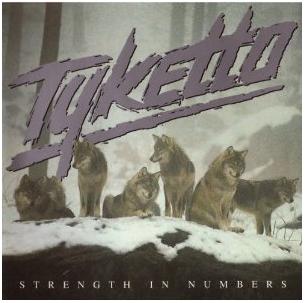
Tyketto: Strength in Numbers (1994)


Well, here's this year's post. It seems like life has kind of just flown by, and I decided I needed to get back to my hobby of listening to music. The album for tonight is Strength in Numbers by Tyketto. I've been thinking about this album a bit lately and decided to dig it up from my mp3 archive.

I'll start with the nostalgia bit: I first became acquainted with Tyketto via a bootleg tape I got from my brother who got it from a friend of his. So when I found a new tape of this, their second album, at Starbound back in '94 I snapped it right up. I remember cranking it up on the beat up speakers I had mounted up on my bedroom wall. Then after High School I kind of forgot about it until the summer of '04 when I rediscovered it and listened to it while I would go running in the mornings. Since then it's been on and off of my playlist but it's always been a favorite.

For those who don't know who Tyketto is, you should. Tyketto is a fantastic east-coast hair band from the early '90s who put out their first album "Don't Come Easy" in 1990 to critical acclaim but it was a bit of a commercial disappointment so not as many people in the USA know about them. The rest of the story you can look up on Wikipedia and I won't waste my breath on a bio.

Strength in Numbers was their 2nd album, which was released in 1994 after a bit of a delay, on a different label from the first, and featured a different bass player. But the core members including Danny Vaughn on lead vocals and Brooke St James on guitar were still there, and the sound of this record is very much a continuation of their style from the first. The impression I get is this band sounds very confident, both in their playing and songwriting. There's an honesty in this album that was hard to find in the mid 90s when everyone was trying to compete with grunge, and I commend these guys for sticking to their guns and releasing a real rock record with no attempt to change their style, playing the music the way it should be played.

The opening title track of the album starts of energetically, with Vaughn's vocal delivery sounding like a cross between Jimi Jamison and a pack of snarling wolves. (Ok I admit it, I wrote this entry partly just so I could say that.) Maybe I'm unduly influenced by the cover art on that point. But the sound has a great balance between the very low bass, the guitar riffs, drums and vocals. The whole record has a very polished sound and it carries through all of the songs.

Track two- "Rescue me" is another up tempo song with more great guitar riffs and excellent backing vocals that really enhance the chorus. The use of backing vocals on this record really lends a fulness to the overall production, again, expertly placed like all the sound elements on this album.

Track three- "End of Summer Days" is a mid-tempo ballad that moves along nicely and provides a good example of the country-tinged rock sound that in my opinion should have been the natural direction that rock music ought to have taken in the 90s. The lyrics of this track bring to mind universal themes of longing for lost love and summertime home-town experiences that I find easy to relate to. Plus the beat of this song is easy to dance to, it could have been a real crossover hit.

"Catch My Fall" continues the laid back mid-tempo neo-country feel with heavier guitars and more of those fantastic backing vocals. The album then takes an unplugged turn with "The Last Sunset", a classic storytelling song that chronicles a man escaping and settling in Mexico, slowly revealing that he's a wanted bank robber, who finally gives up on running and enjoys one more sunset while waiting for the police to come.

While I don't have time to do a full track by track, and I can't personally endorse the lyrics on every single song (that's up to the individual listener when it comes to hard rock music) this album has a lot of good songs and no filler, musically.

Another of the highlights of this record for me is "Meet Me in the Night", which has one of those clean pop guitar picking riffs in the opening and a gradual buildup of sound that I personally love to listen to just for the way it sounds structurally.

Towards the end of the album comes "Inherit the Wind" which has a cool intro, a similar beat to "Rescue me" and again showcases Danny Vaughn's vocal delivery in a way similar to the opening track.

The final track of the album, a remix of "Standing Alone" from the first album featured some re-recorded guitars and vocals and added a nice touch to one of their best ballads which made for a very good single to re-introduce the band to casual listeners. This song has a lot of meaning for me and was one of the songs that helped me through some of the loneliest times in my life, and is part of the reason I still listen to this band while other heavy metal bands fell by the wayside.

Rumor has it that Tyketto is finally working on an all- new album after all these years and I'm really looking forward to it.

Saturday, June 12, 2010

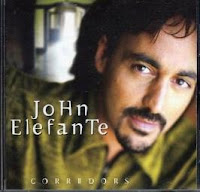
John Elefante: Corridors


The subject of tonight's post is the John Elefante album "Corridors". (Although at the rate I blog it might as well be this year's post. But I need to keep this up if only for the sake of being able to remember my password.)

Before I go any further I need to help get the word out that John Elefante has just put out his first album in 10 years, called "Revolution of Mind". It's actually a reunion of his old band Mastedon but due to confusion with a totally different band called Mastodon, it's been released in the U.S. under the name "John Elefante and Mastedon". But that's a new album, and I don't review new stuff here. So check back in about 15 years (ok maybe not that long) I haven't had a chance to buy that one yet (dang budget), though I've heard sound samples and it sounds excellent so far.

"Corridors", Elefante's 1998 album, was his second solo effort but is by no means sophmoric. John Elefante by that time had enjoyed a long and acclaimed career as a producer, particularly in the Christian market where he had worked with artists such as Petra. So of course the production on this album is top-notch. That pretty much applies to anything Elefante produces, and he's one of my heroes when it comes to audio production, up there with Tom Scholz and Aldo Nova.

The songwriting, while not quite as catchy to my ears as his 2000 follow-up Defying Gravity (which I actually got ahold of before this one), is a great listen, with good mid-tempo cuts throughout such as "Eyes of My Heart" and the title track "Corridors". The album also features an excellent ballad, "Where does our Love Go".

But the real gem of this album, and the one which I consider the centerpiece of the whole disc, is "Not Just Any Other Day". The song tells about crucifixion of Christ, making the point that people around Jerusalem in 33 AD were going about their business without realizing that the most important event in the history of mankind was taking place. How many times do we miss the most important things while going about our daily business?

Saturday, November 7, 2009

Boston: Amanda


Once again I'm back after a long delay. Life gets busy and blogging can be hard to keep up with. But speaking of long delays, tonight's subject is the song "Amanda", the #1 hit single from Boston's 1986 album, Third Stage.

I had become acquainted with Boston through that album. For me, it was a well-worn tape borrowed from my older brother, with its amazing fold-out cassette cover art of a giant organ-powered spaceship in orbit, and the liner notes detailing how Tom Scholz created fantastic soundscapes with homemade equipment over a 6-year period while dealing with all sorts of problems in his basement studio.

Third Stage (and to a lesser extent the equally fantastic 1994 follow-up Walk On) really defines the sound of Boston for me, much more than their first two albums, and reflects a generation gap in Boston fans-- the first two albums had appealed to the youngest of the Baby Boomers, while most late Gen-Xers like me were either in diapers or too busy watching Sesame Street to pay attention to rock-and-roll during Boston's initial 70s heyday. So Third Stage was the Boston album for my generation.

"Amanda", along with many other songs, has a lot of meaning for me. In the summer of 2004, I started spending time with a beautiful young woman who had sat next to me in a religion course in college the year before. She had a sparkling, spunky personality, and was one of the sweetest, kindest people I had ever met. After I had called her a couple of times, she came up to me and flat-out asked me on a date, (I was rather shy and still am) and over the course of the next several dates I fell head-over heels for her. Suddenly, it was like someone had turned on a switch and I understood the meaning behind the words of this song. It perfectly detailed what I was feeling, the introspection, the worry and anticipation, and the overwhelming desire to tell her I was in love with her.

So I sat down with my guitar and my 4-track, and I recorded a terribly amateur rendition of this song, faking the chords as best I could in my own key, and replacing the name "Amanda" with the girl's name (which also started with an A). I packaged it up on a CD-R along with a few of my other recordings, and, after walking her home from watching the fireworks on the 4th of July, I gave it to her.

And, right then, she broke up with me.


The next day, we both got called to co-chair an important church committee for our student congregation. Talk about God micro-managing your life! To call it divine intervention is almost an understatement!

Several months later, after much soul-searching, with each of us dating other people and breaking each others' hearts, we got together for another date. And this time, I brought my guitar and sang it to her live. And this time, it worked.

That was over 4 years ago. This week, our daugher Amanda was born, weighing 5 lb 15 ounces.


Babe, feelin' the way I do
I don't wanna wait my whole life through
To say...
I'm in love with you.